
BY DECAN
The Minister of Defence, retired Gen. Christopher Musa, has warned Nigerians against weaponising misinformation, cyber manipulation and violence ahead of the 2027 general elections.
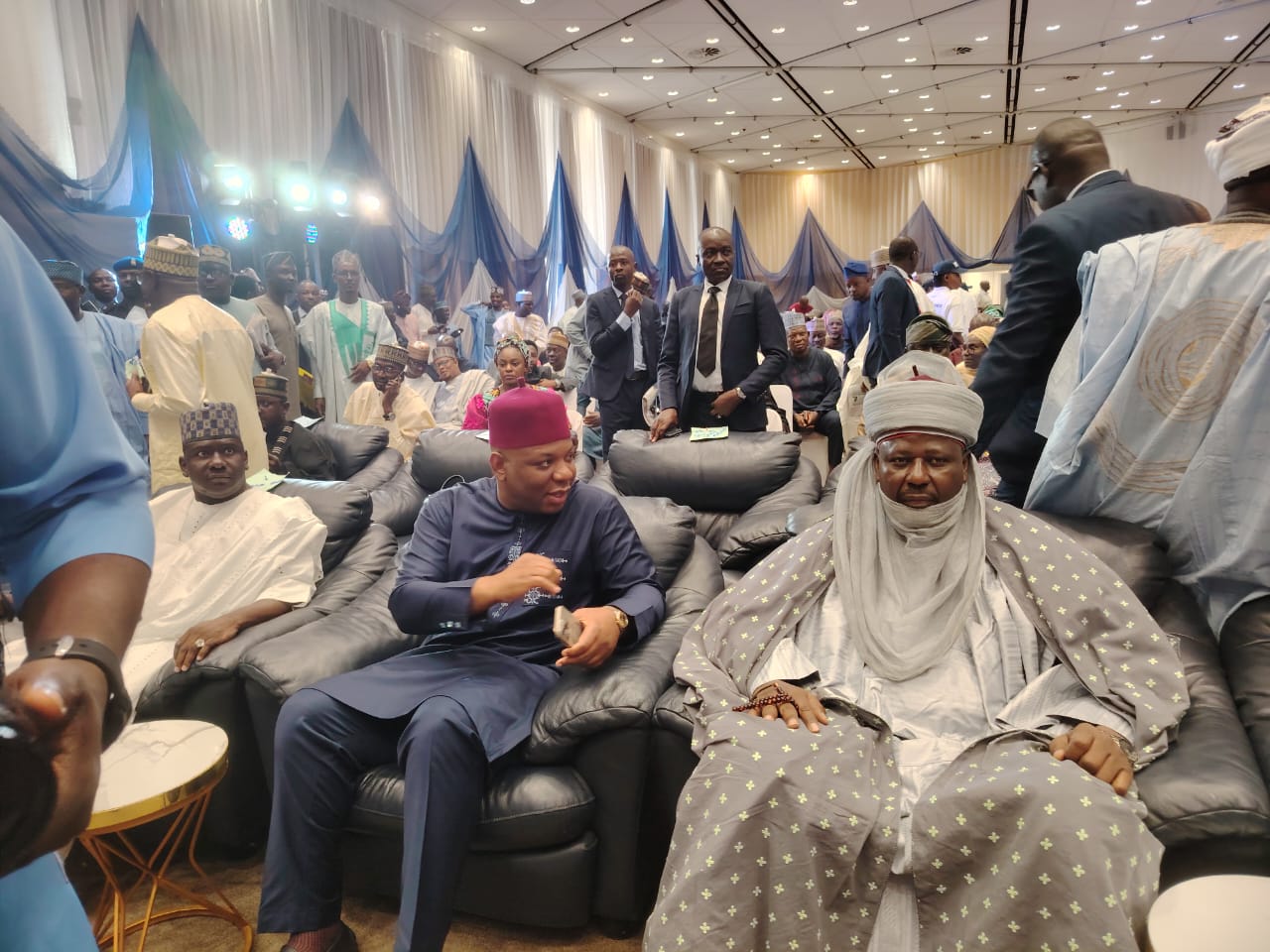
Musa, represented by his Special Adviser on Policy and Research, retired Maj.-Gen. Olufemi Akinjobi, gave the warning in Abuja while delivering the keynote address at the 2025 Blueprint Newspapers Impact Series and Awards Ceremony.
He said the evolving security environment had made election security a broader national security concern requiring intelligence, cyber resilience and coordinated strategic communication.
According to him, election security can no longer be restricted to protecting polling units, electoral materials and voters on election day.
“Election security can no longer be viewed simply as the protection of polling stations. It is, fundamentally, the protection of democratic legitimacy,” he said.
Musa said modern threats increasingly emerged through cyberspace, manipulated information, economic hardship and narratives capable of exploiting ethnic and religious divisions.
He warned that artificial intelligence had created new vulnerabilities, including sophisticated fabricated videos, cloned voices and manipulated images capable of misleading millions within minutes.
“The greatest threat to an election today may not necessarily be the individual carrying a weapon near a polling unit.
“It may well be the anonymous actor operating behind a computer screen, deliberately manipulating information and exploiting social divisions,” he said.
The minister stressed that public trust had become one of the most strategic national assets required to sustain democracy and political stability.
He said the integrity of the 2027 elections would depend not only on electoral and security institutions, but also on responsible journalism and informed citizen participation.
Musa said the media must inform rather than inflame, educate rather than manipulate, and build confidence rather than deepen divisions.
He noted that Nigeria’s experience since the return to democratic rule in 1999 showed that effective election security required months of preparation, intelligence-led operations and inter-agency coordination.
“Security should never be viewed as an event. It is a process that begins long before campaigns commence and continues long after the final vote has been counted,” he said.
Musa also reaffirmed the constitutional neutrality of the Armed Forces of Nigeria in the electoral process, saying the military owed allegiance to the Constitution rather than political parties or candidates.
“The Armed Forces owe allegiance neither to political parties nor to individual candidates. Our allegiance is to the Constitution of the Federal Republic of Nigeria.
“Our loyalty is to the Nigerian people. Our commitment is to peace, stability and the preservation of democratic order,” he said.
The minister unveiled what he described as the SECURE Framework, a strategic approach aimed at strengthening Nigeria’s democratic resilience ahead of 2027.
He identified strategic intelligence integration, electoral cyber resilience, civil-military coordination, unified strategic communication, responsible information environment and engaged citizens as key pillars.
Musa said election security must become intelligence-led, supported by early-warning systems, threat assessments and real-time information sharing among security, intelligence and electoral institutions.
He also stressed the need to protect electoral systems, communication networks and information platforms against cyber intrusion, digital sabotage and malicious interference.
The minister called for stronger coordination among the Office of the National Security Adviser, Armed Forces, Police, Department of State Services, Defence Intelligence Agency and INEC.
He said seamless collaboration among security and electoral institutions would deliver better outcomes than institutional competition during national emergencies and major public events.
Musa assured Nigerians that the Ministry of Defence would support efforts to ensure that constitutionally assigned responsibilities during the 2027 elections were discharged professionally, impartially and effectively.
He said the ministry would strengthen inter-agency planning, intelligence collaboration and operational readiness while supporting efforts to protect critical national infrastructure.
The minister further emphasised that discipline, respect for human rights and fidelity to the Constitution remained essential to sustaining public confidence in the Armed Forces.
He urged political parties and candidates to place national interest above partisan advantage, stressing that political competition must not be treated as warfare.
“Political parties must place national interest above partisan advantage, and candidates must recognise that political competition is not warfare,” he said.
Musa also urged the media to uphold accuracy and restraint, while encouraging civil society, traditional and religious leaders to promote civic education, moderation and peaceful participation.
He particularly appealed to Nigerian youths to reject attempts to recruit them as instruments of electoral violence and manipulation.
The minister said the ultimate objective of the 2027 elections should extend beyond producing political winners to preserving Nigeria’s unity, security and democratic institutions.
“The election of a President, Governor or Legislator is undoubtedly important. But there is something even greater that must emerge victorious in 2027: Nigeria herself,” he said.
Musa said a successful electoral process would be one that strengthened democratic confidence and ensured that Nigerians could participate freely without fear.
He urged all stakeholders to collectively ensure that Nigeria emerged from the 2027 electoral cycle more united, secure and confident in its democratic institutions.
Earlier, The Managing Director/CEO of Blueprint Newspapers Ltd, Malam Salisu Umar, said the choice of the theme was also informed by the need to deepen public understanding of emerging threats that could undermine the 2027 electoral process.
Umar listed kidnapping, banditry, violent extremism, cyber threats, misinformation, political violence and attacks on electoral infrastructure as issues requiring collective attention.
He said the event was conceived not only to recognise outstanding Nigerians but also to provide a platform for critical conversations on issues affecting Nigeria’s peace, security and democratic development.
Umar urged political leaders, security agencies, the media, civil society organisations and citizens to work collectively to safeguard the integrity of the 2027 elections and strengthen Nigeria’s democracy. (DECAN)